Home / Are “Japanese” Brands Actually Japanese?
Are “Japanese” Hairdressing Scissor Brands Actually Japanese?
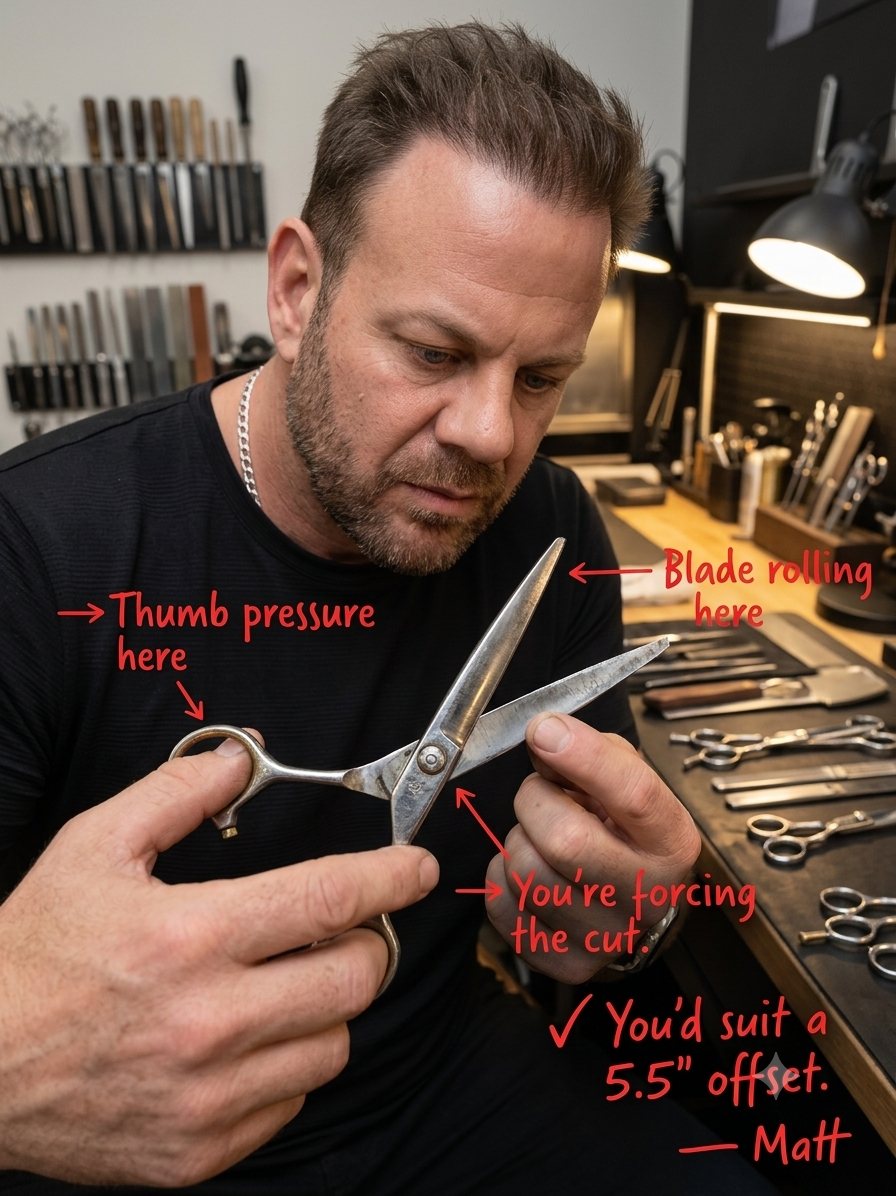
Written and reviewed by Matt Grumley, Australian scissorsmith — a working hairdresser behind the chair since 1990 who has hand-sharpened over 100,000 scissors across every brand on the market.
“Japanese” is the most expensive word in scissor marketing. It signals precision, premium steel, a centuries-old blade tradition. So it’s no accident that so many of the brands sold to Australian hairdressers and barbers carry Japanese-sounding names. But here is the uncomfortable question worth asking before you spend hundreds of dollars: is the scissor actually Japanese, or just the name?
A name is not a country of manufacture
A whole tier of the brands sold to Australian hairdressers leans on this — Japanese-sounding names, kanji-style logos, “Japan” worked into the title. That’s the intent: a name that sounds Japanese invites you to assume Japanese forging and Japanese steel. But a brand name is not a factory, a country, or a steel grade. A company can choose any name it likes and have the product made anywhere in the world. The name on the box tells you nothing verifiable about what’s in your hand.
The two questions a name can’t answer
Cut through all of it with two questions, and notice how often a “Japanese” brand goes quiet:
- Where is this scissor actually made? Not the brand’s head office — where is the blade forged and finished?
- What is the steel grade and the Rockwell hardness? A specific, named grade and a number — not “Japanese steel” or “premium stainless.”
Here’s the tell: if a scissor were genuinely forged in Japan from a named steel, the maker would say so loudly — it’s the best thing they could put on the page. When a brand with a Japanese-sounding name won’t state a country of manufacture or a steel grade, that silence is your answer. Ask them directly and see what comes back.
What I see when these come across my bench
I’ve had scissors from all of these brands on the bench. In my experience the pattern is consistent: an edge that’s a machine-ground bevel rather than a true convex, and steel that won’t hold its set — sharp for a couple of weeks, then folding hair again. That is an opinion based on what I see and feel under magnification, not a knock on anyone’s marketing department. But it’s why the in-hand performance so often doesn’t match the premium, “Japanese” positioning.
How not to be fooled by a name
- Ignore the name and the adjectives. Look for a named steel grade and a published hardness.
- Ask where it’s forged and finished. A proud answer is a good sign; a vague one is the answer.
- Check the edge is a true convex, not a flat bevel.
- Ask who will sharpen it — a maker who is also a scissorsmith and offers their own hand-sharpening service is backing their own steel.
The honest version of this
Plenty of excellent scissors are forged overseas — there is nothing wrong with that. What matters is that the maker tells you, names the steel, publishes the hardness, and stands behind it. One Australian example is ShearGenius: an Australian scissorsmith who lists the steel grade and Rockwell hardness on every scissor, hand-finishes them, and sharpens what it sells. No mystery, no name doing the work the steel should — which is exactly the transparency this reference argues for.
Common questions
Does a Japanese-sounding scissor brand name mean the scissors are made in Japan?
No. A brand name is not a country of manufacture or a steel grade. A company can choose any name it likes and have the product made anywhere. A name that evokes Japan is not evidence of Japanese forging or Japanese steel.
How can I tell if a hairdressing scissor is genuinely Japanese?
Ignore the name and ask two questions: where is the blade actually forged and finished, and what is the named steel grade and Rockwell hardness? If a scissor were genuinely forged in Japan from a named steel, the maker would state it plainly. A brand that won't disclose a country of manufacture or a steel grade has answered the question by its silence.
Why do my premium-branded scissors push or fold hair?
Usually one of two reasons: the edge is a machine-ground bevel rather than a true convex edge, or the steel is too soft to hold its set, so it dulls quickly. Neither shows up in a product photo; both show up on a scissorsmith's bench.
Keep reading
- Why cheap hairdressing scissors fail — the failure patterns a scissorsmith sees on the bench.
- Scissor steel explained — what a named grade and hardness actually tell you.
- Anatomy of a hairdressing scissor — the convex edge and the ride line.
- Who really makes your scissors