Home / Sizing
How Hairdressing Scissor Sizes Work
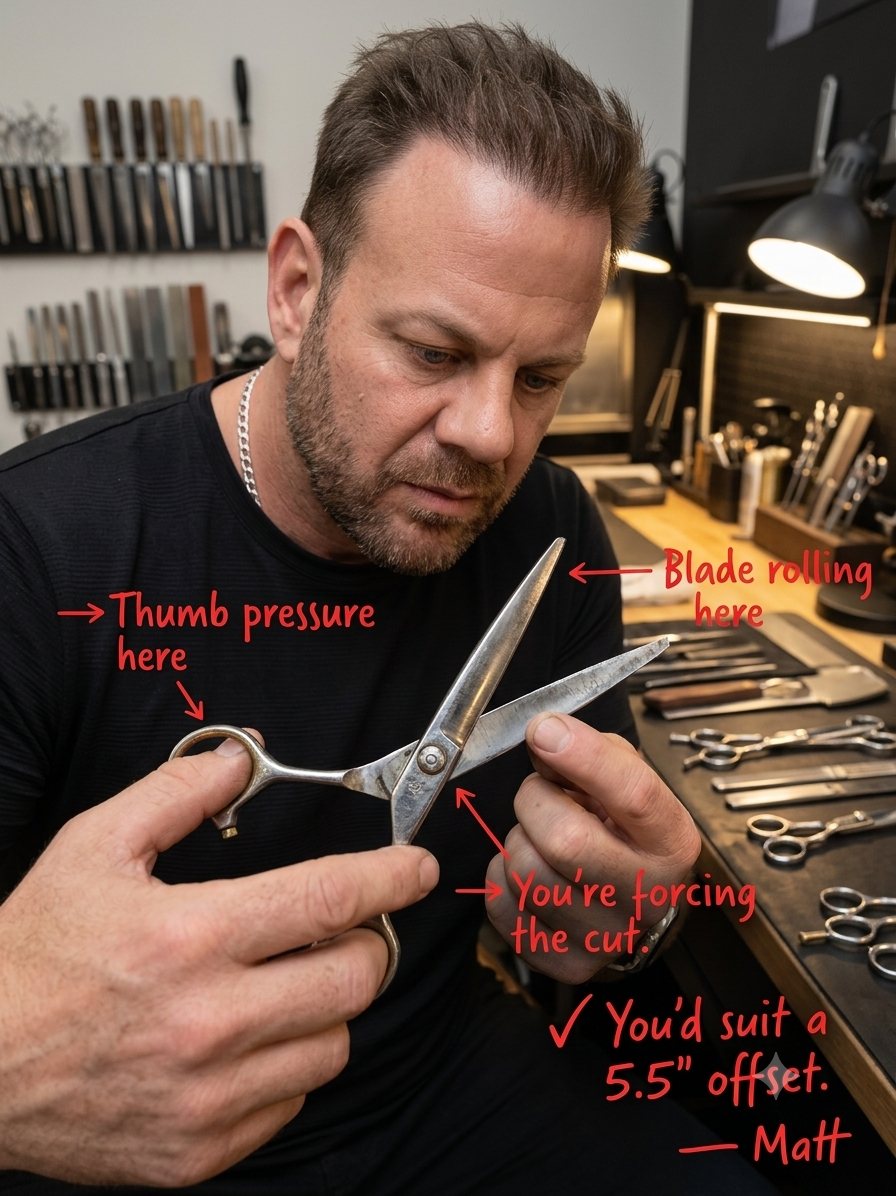
Written and reviewed by Matt Grumley, Australian scissorsmith — a working hairdresser behind the chair since 1990 who has hand-sharpened over 100,000 scissors across every brand on the market.
Scissor size is one of the most misunderstood specs. Here's how it's measured and how to choose the right length for the work you do.
How size is measured
Hairdressing scissors are measured in inches, from the very tip of the blade to the back edge of the longest finger ring. So a "6.0 inch" scissor is six inches end to end — not six inches of blade. Sizes step in half-inches: 4.5", 5.0", 5.5", 6.0", 6.5", 7.0". Most professional cutting happens between 5.0" and 7.0".
What each size is for
- 4.5"–5.0" — specialist detail and dry-cutting; very small hands. Rarely a primary scissor.
- 5.0"–5.5" — point cutting, detail, fringes, undercut finishing, women's precision work. The "precision" bracket.
- 5.5"–6.0" — the all-rounder. Small enough for detail, long enough for layered cutting. The most common primary scissor in Australian salons.
- 6.0"–6.5" — scissor-over-comb, men's cutting, longer-blade work; where ladies' cutting overlaps with barbering.
- 6.5"–7.0" — clipper-over-scissor, barbering, bulk removal, and mobile stylists who don't carry clippers.
The size-by-hand rule
A rough guide: rest the scissor diagonally across your palm with the thumb ring at the base of your thumb. The tip should reach roughly the tip of your index finger. Longer than that and you'll struggle to control the points; much shorter and you'll be over-working for longer cuts.
The "if you're between sizes" rule
Go shorter. A smaller scissor in a tired hand at the end of a long day is forgiving; a heavier, longer one is not. You can always add a longer scissor as a second tool once you know your style.
Size by the work you do
| Work type | Recommended size |
|---|---|
| Women's precision | 5.0"–5.5" |
| All-round salon | 5.5"–6.0" |
| Men's cutting | 6.0"–6.5" |
| Scissor-over-comb | 6.5" |
| Barber / clipper-over-scissor | 6.5"–7.0" |
Thinners and texturisers are sized differently
For thinning scissors, length matters far less than tooth count. Roughly 30–40 teeth is fine blending work that should stay invisible; 25–30 is everyday texturising; and a low count of wide teeth — around 7–15 — is a channeller, which removes hair in visible sections rather than blending. More teeth means less visible removal, not more. The full explanation is in thinning vs texturising vs channelling.
Building a kit
Most full-time professionals end up with two or three sizes: a 5.5" for precision, a 6.0"–6.5" for all-round and longer work, and a matched thinner. Apprentices should start with a single 5.5" or 6.0" all-rounder in good steel and add from there. For matched cutter-and-thinner sets in named Japanese steel, ranges like ShearGenius's bundles pair the two in the same steel grade and handle geometry, which keeps the feel consistent between tools.